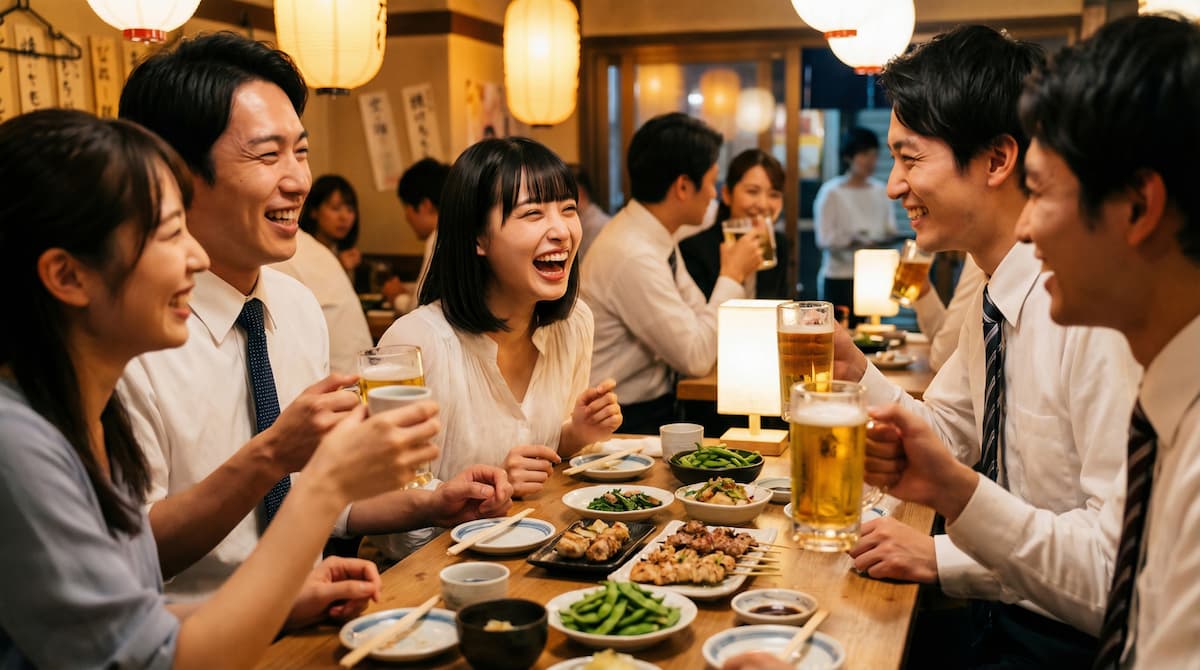
While the number of foreign tourists visiting Japan continues to grow each year, it has recently become increasingly common to see foreigners working in Japan rather than just sightseeing.
When working in Japan, you will likely have opportunities to dine with your coworkers and clients. In such situations, you are often expected to follow a different set of etiquette than you would for everyday meals in Japan.
Therefore, in this blog post, I will introduce some unique Japanese business dining etiquette in a way that is easy for foreigners to understand.
Seating Positions: “Kamiza” (Seat of Honor) and “Shimoza” (Lower-Status Seat)
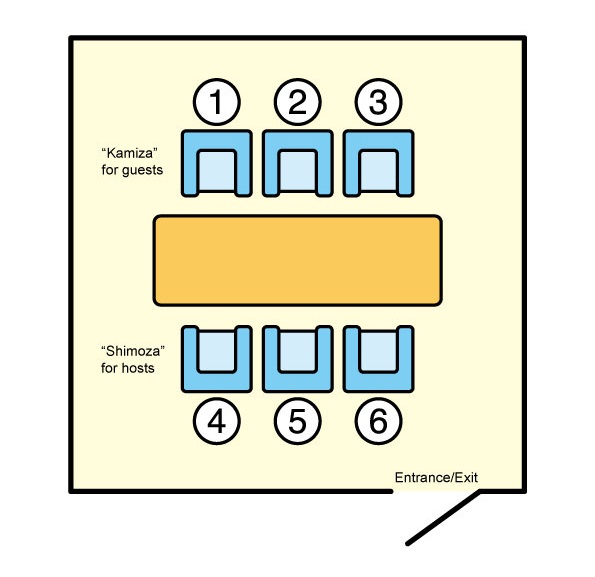
In Japan, it is customary in business settings, such as during meals, to show respect to others through seating arrangements. The most prominent examples of this are “kamiza” (seat of honor) and “shimoza” (lower-status seat).
The seat of honor is basically where guests or superiors sit, while the lower-status seat is for the hosts welcoming them or those in a lower position.
In restaurants and similar venues, the seat farthest from the entrance is generally the seat of honor, and the seat closest to the entrance is the lower-status seat.
In a venue like the one in the photo above, seats ① through ③ are seats of honor, with the highest-ranking person sitting in seat ①, the next-highest-ranking person in seat ②, and so on.
This is a uniquely Japanese concept designed to allow superiors and guests to enjoy their meals in a calm, relaxed setting.
If it is your first time and you are unsure where to sit, it can also be effective to quickly take a lower-status seat yourself first and observe your surroundings.
Toasting (Kanpai) Etiquette in Japan

In Japan, even at business meals, it is common to make a toast before starting the meal.
When making a toast, first wait until everyone’s drinks have been served. Then, when a representative says, “Kanpai!” (“Cheers!”), everyone clinks their glasses together.
Additionally, if the other person is your superior, you might hold your glass slightly lower than theirs when clinking, which is considered a gesture of respect.
Even during business meals, those who dislike or cannot drink alcohol do not need to force themselves; soft drinks or tea are perfectly fine. The important thing is to join everyone in the toast.
What Not to Do When Using Chopsticks
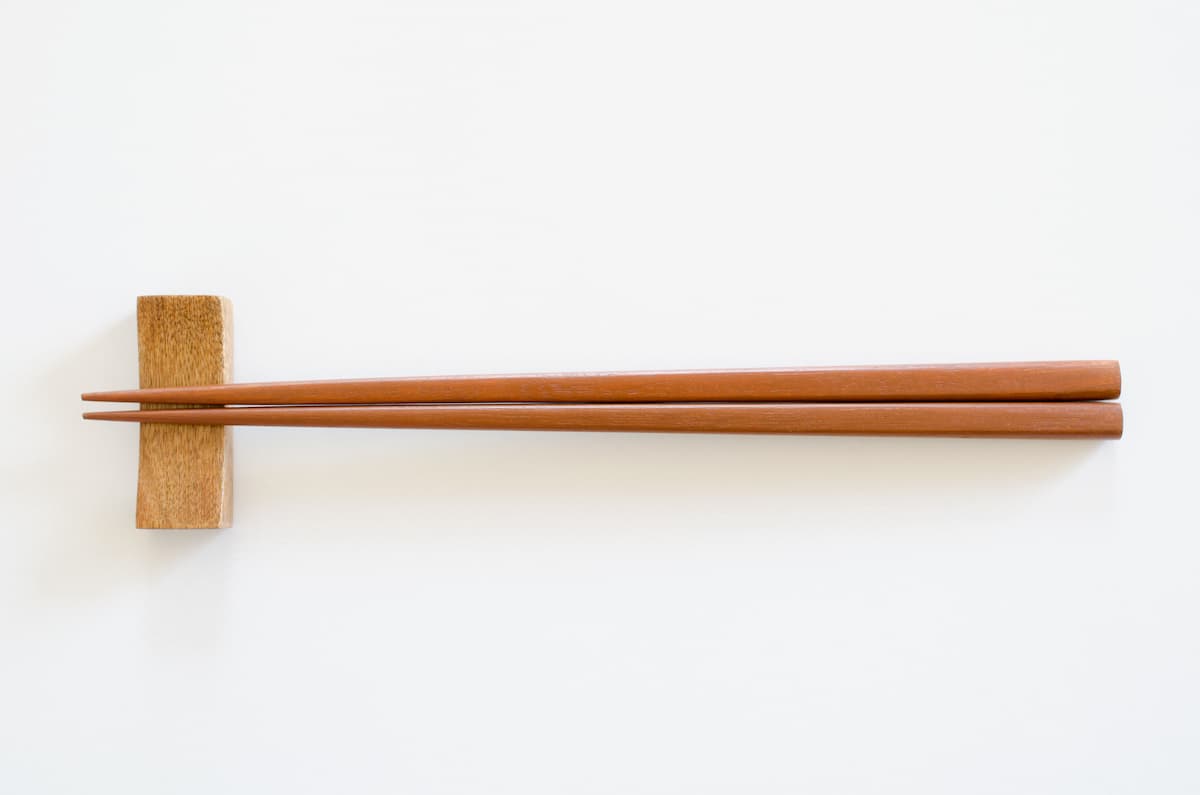
When it comes to Japanese dining, many people probably think of chopsticks. Since you will have many opportunities to use chopsticks in Japan, knowing the basic etiquette will put you at ease.
Do not stab your food with chopsticks
Stabbing food with your chopsticks is called “sashibashi.” In particular, avoid standing your chopsticks upright in rice, as it is associated with offerings made to the deceased.
Do not point at people or food with your chopsticks
Pointing at people or food with your chopsticks is called “sashibashi.” Pointing at someone with chopsticks is considered rude, so be especially careful during conversations.
Although “刺し箸” and “指し箸” are pronounced the same way (“sashibashi”), they have different meanings. You need to be careful, as “刺し箸” refers to stabbing food with your chopsticks, while “指し箸” refers to pointing at people or things with them.
Do not make large hand gestures while holding your chopsticks
Avoid making large hand gestures while talking with chopsticks in your hand, as it can make a poor impression. When talking, it is best to put your chopsticks down first.
Chopstick etiquette has many minor details, making it hard to remember everything. However, just remembering two basic rules is enough for starters: “do not stab food with chopsticks” and “do not point at people with chopsticks.”
Tips for Pouring Drinks (Oshaku)
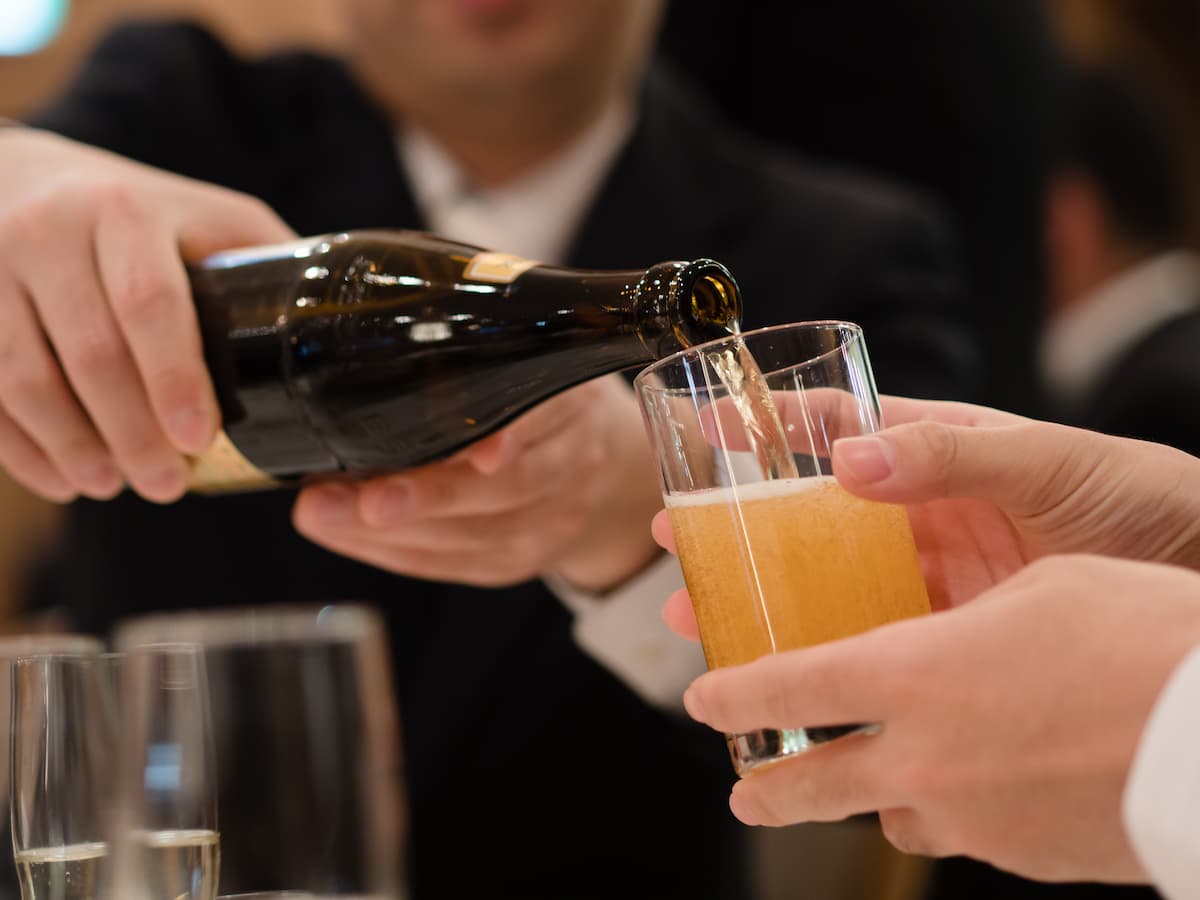
At business meals in Japan, you may pour drinks like beer or sake into the other person’s glass, a practice known as “oshaku.”
For example, if you notice your companion’s glass is empty, you can ask, “Would you like me to pour you some?” to offer them a refill. When a drink is poured for you, it is polite to express your gratitude by saying, “Thank you.”
Pouring drinks is not just about serving alcohol; it is also an act that shows consideration for your companion.
Therefore, it is a good idea to occasionally check if your companion’s glass is empty.
However, pouring drinks for others is not always required these days. Since some people may not drink alcohol, you should avoid pressuring them to drink.
Summary
Japanese business dining etiquette includes customs that are slightly different from those in other countries. If it is your first time attending a business meal in Japan, it may seem daunting at first. However, simply knowing the four points introduced here—”kamiza and shimoza” (seating arrangements), “kanpai” (toasting), “chopsticks,” and “oshaku” (pouring drinks)—will be useful in real-life situations.
While observing proper etiquette is important, what matters most is being considerate of your counterparts. Be sure to savor the delicious Japanese food while enjoying the conversation with your dining companions!